What a Custom USB Mold Fee Buys: Cavities, Slides and Rework Rounds
A mold fee on a custom USB quote is not a profit line - it is the cost of cutting one steel tool that shapes the body for the entire order. Once that tool exists, every unit it produces is cheaper, which is why the fee feels large up front and the unit price feels small later. Understanding what the fee actually buys is the difference between challenging the number and approving it with confidence. The four things that move it are cavity count, slides, surface finish, and how many rework rounds the shape needs.
Why a Mold Fee Exists at All
A standard drive uses a body already tooled by the factory; a custom shape does not exist until a steel mould is machined to your design. That tool is the mold fee. It is a one-time cost amortised across the order, not a per-unit charge, which is why a higher quantity lowers the effective cost per piece. The mould also belongs to your shape - it is not shared with another customer's product - so the fee is what secures exclusive use of that body for your run. Treat it as tooling capex, not as a markup on the drive itself.
Cavity Count: The Number That Moves Price and Fee Opposite Ways
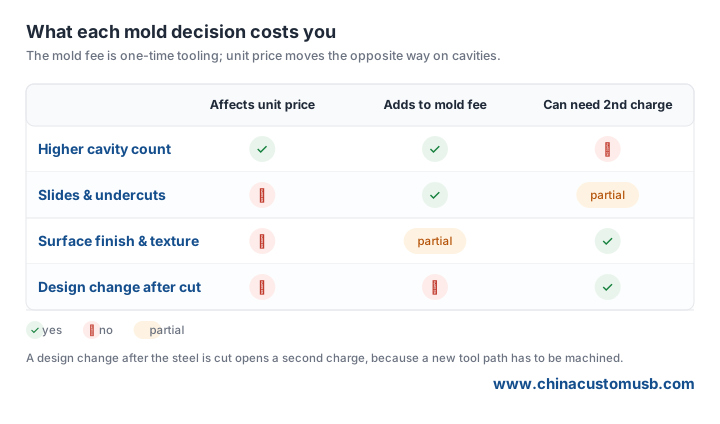
A cavity is one impression the tool makes per cycle. A two-cavity tool finishes two bodies per press cycle; an eight-cavity tool finishes eight. More cavities raise the mould's complexity and therefore its fee, but they also raise output per cycle, which lowers the unit price. The two move in opposite directions, so the right cavity count is a volume decision: low volume does not justify a high-cavity tool, while high volume pays the larger fee back quickly through a lower per-unit cost. Ask the quote to split the fee from the unit price so you can see both effects.
Slides and Undercuts: What Makes a Shape Cost More
A flat logo plate is cheap to tool because the part releases straight out of the mould. A shape with an undercut - a drill bit that sticks out, a hinge, a recessed grip - cannot release straight, so the tool needs moving sections called slides that retract before the part ejects.
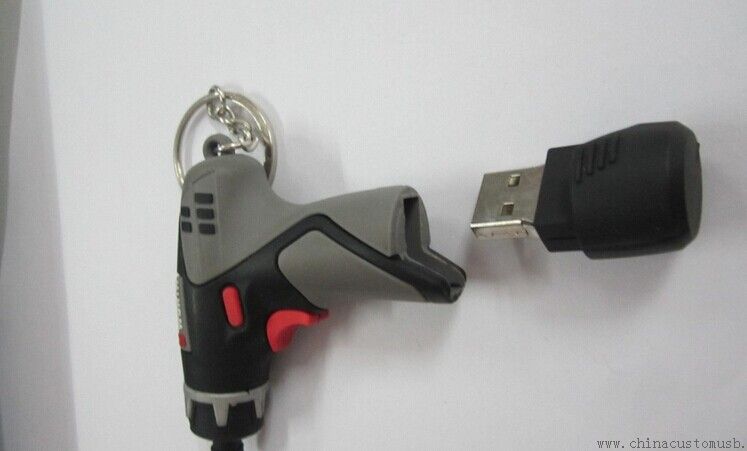
Each slide is extra steel, extra machining, and an extra point of wear, so a shape with one or two undercuts costs more to tool than a clean silhouette of the same size. When you brief the factory, separate 'I want this outline' from 'I need this moving part,' because the second sentence is what changes the fee. A simpler release path can often keep the look while dropping a slide.
Surface Finish and Texture: Where Money Goes After the Shape
Once the shape is settled, the surface still costs money. A gloss or matte single-colour finish is straightforward; a multi-tone print, a soft-touch coating, or a textured grip adds process steps after moulding. These do not always raise the mould fee directly, but they raise the per-unit cost and, when the texture is part of the tool itself, they can add a second machining pass. Specify the finish in the same conversation as the shape so the quote reflects the whole part, not just the mould.
What Each Mold Decision Costs You
The table below keeps the four levers in one view before you approve the quote.
Amortisation and Rework: What the Fee Covers, What Triggers a Second Charge
The mould fee covers cutting the tool and the first round of samples. It does not cover a change of heart after the steel is cut: revising the shape then means machining a new tool path, which the factory will charge as a second fee. The first samples exist precisely so you can catch those changes before that point. Send a 3D file or a photo of the shape you have in mind; we will return a mold fee split into cavities, slides and finish, plus the quantity where the fee stops dominating the unit price, so you can approve the number knowing exactly what it buys.
Need custom USB drives for your next project?
Factory-direct pricing, free digital proof and a 7-day sample turnaround.
Get a free quote


