Are Branded USB Drives Still Effective? 3 Signals to Instrument Before You Reorder
A branded USB drive is still a working marketing channel in 2026 - but only if you can tell whether the last batch actually earned its cost. The useful question is not "are USB drives dead". They are not: corporate IT still blocks large cloud attachments, and trade-show booths still hand out something physical. The useful question is whether your batch did its job, and that is measurable. Three signals tell you before you sign the next purchase order: a redemption page, the preloaded file that actually got opened, and who comes back for the same drive. Instrument those three and the reorder decision stops being a guess.
Effective at What: Three Different Jobs a Giveaway Drive Does
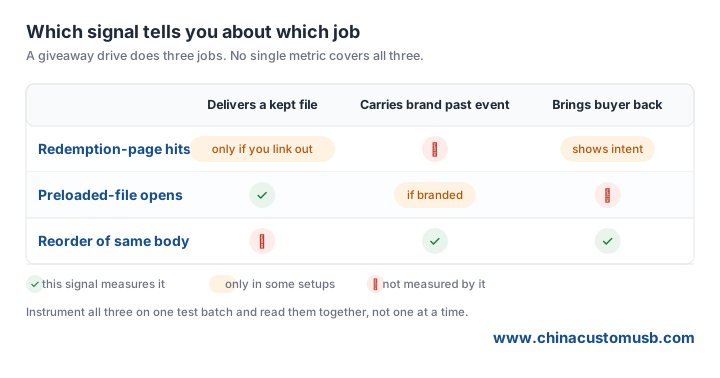
A drive handed out at an event is doing one of three jobs, and each job needs a different way of being measured. The first is delivery: it carries a file the recipient keeps. The second is branding: it carries your name past the event, ideally into a pocket or onto a keyring. The third is return: it brings the buyer back to you. A single "everyone loved it" feeling at the booth does not measure any of the three. Treat the drive as a small measurement instrument, not a billboard. Teams that skip this step reorder on gut feel and frequently repeat a shape nobody actually kept.
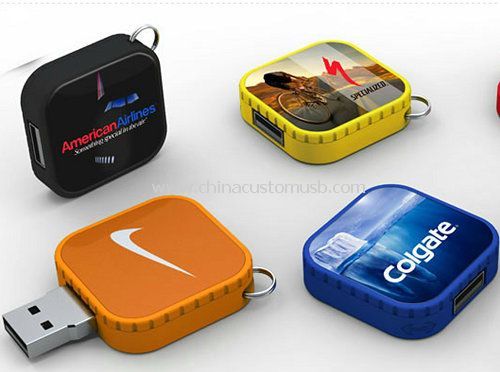
The shape decides how long job two survives. A flat card drive gets filed and forgotten; a rotary or cap-style body that lives on a keyring stays in daily view for months. The preload decides job one: a redemption link or a single useful file beats a folder of everything. Pick the shape and the preload for the job you most need measured, then read the signal for it.
Signal One: The Redemption Page, Not the Impression Count
Print a unique short URL or a QR code on the drive that points to a landing page you control. The number that matters is redemption-page sessions over the following 30 days, not how many people smiled at the booth. A batch of 500 drives that produces 40 redemption sessions is a concrete, defensible result; "great engagement" with no page to count is nothing. Use a URL shortener or a UTM tag so you can see sessions rather than raw clicks, and watch the shape of the curve: a steady trickle across three weeks tells you the drive is still being found in a drawer, while a one-day spike means it was opened once and dropped.
Signal Two: Which Preloaded File Actually Gets Opened
If you preload a brochure PDF, a product video, and a redemption link, the hosting analytics or the open events show which asset people actually opened. The file that should win is the core asset - usually the video or the catalogue - not the index or the autorun splash. If only the index file gets opened, the problem is your file layout, not the drive, and you can fix it before the full order. Read this signal per file, because it tells you what to put on the drive next time and what to leave off.
Signal Three: Who Asks to Reorder the Same Body
The strongest evidence a drive worked is a repeat request for the identical shape and preload, not a new specification. A marketing manager who comes back for "the same 8GB rotary drive with the same link" is telling you the asset did its job and the recipient liked the form factor. Track reorders by shape-plus-preload fingerprint rather than by account name, because the same person often reorders under a different project code. A second order of the same SKU is the signal no impression count can fake.
Running a Small Test Run Before the Full Order
Do not commit the full volume blind. Order 100 to 200 units with your real preload files and a unique redemption URL, hand them out at one event or to one customer segment, and read the three signals over 30 days. Use those numbers to size the full order and to fix the file layout or the landing page first. The cost of a 150-unit test run is a rounding error against a 5,000-unit mistake, and it turns the reorder conversation from opinion into evidence.
Ready to stop guessing? Ask for a small test run with your own preload files and a redemption URL, read the three signals over 30 days, then size the full order from evidence instead of hope.
Need custom USB drives for your next project?
Factory-direct pricing, free digital proof and a 7-day sample turnaround.
Get a free quote

